


We are all actors. Or at least that’s what Canadian-American sociologist Erving Goffman believed.
I started reading Goffman’s book ‘The Presentation of Self in Everyday Life’, which explores Goffman’s dramaturgical analysis—the analysis of face-to-face human interactions through the lens of theater imagery. Published in 1956, ‘The Presentation of Self in Everyday Life’ became Goffman’s most famous work and was listed as the 10th most important sociological book of the 20th century!
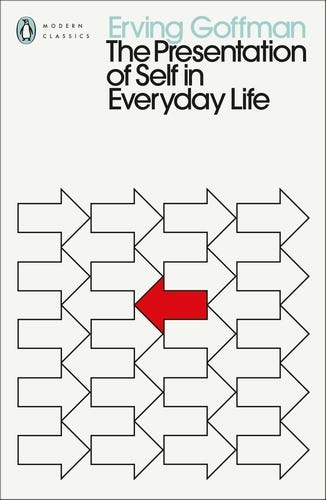
In Goffman’s report, every element of acting and the theater stage are used to break down and make sense of everyday life: We are ‘actors’ performing for an ‘audience’ on a constructed ‘stage’; our ‘props’ and ‘settings’ influence our actions, as does our pre-existing front (age, racial characteristics, height, mannerisms, voice, etc). The actor is being watched by viewers, while the actor may also be the audience in their viewers’ play. I’m obsessed.
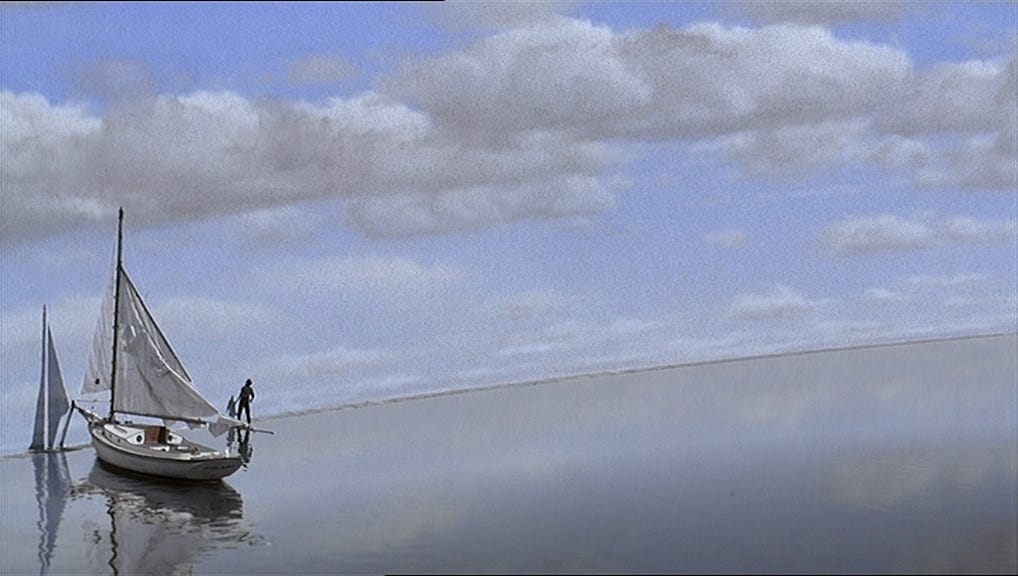
The Truman Show and Big Fish were two of my favorite movies as a teenager. I don’t know if that makes me odd or just consistent. Ironically, both movies explore themes of being watched, questioning reality, and this connection that we have between performance and life. I think identity and our exploration of self is extremely important to us. I took drama class all through school, and one of the skills we are taught when given a script is how to analyze the context of our character’s scene. What is the setting? What brought them to where they are? What are they feeling? And, like Goffman’s theory suggests, maybe life imitates theater after all. We are individually and collectively digging through our individual and collective scripts, wanting to understand who we are and why we are. I believe that at the core of being human, is the longing to make sense of who you are. But not all of us have the courage to explore.
David Bowie said that it is in all of us to question our relationship to the universe. David Bowie had public personas (you can even Google persona and find his name referenced under the dictionary’s example). But he was also incredibly vulnerable in his self exploration, especially considering how much of it was done in the public eye. His personas were like an outlet for his questions and curiosity.
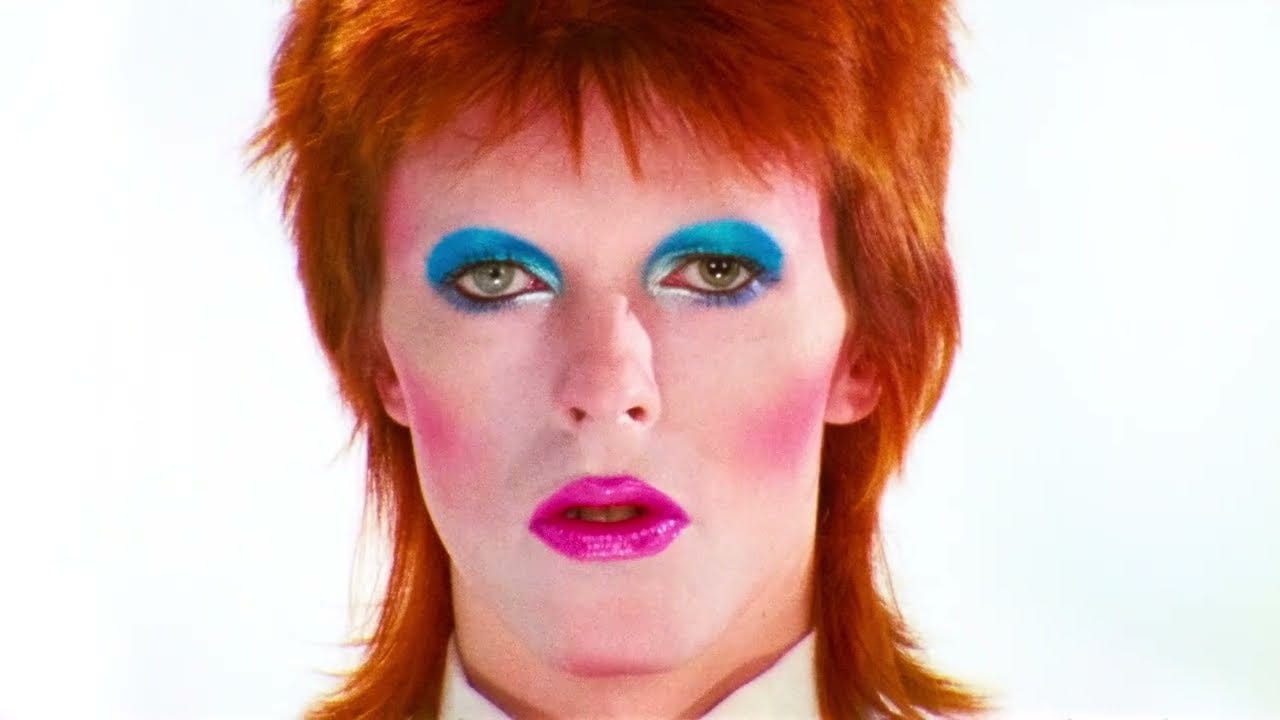
I’ve never been sure of my own personality. […] I’m a collector. And I’ve always just seemed to collect personalities, ideas. —David Bowie
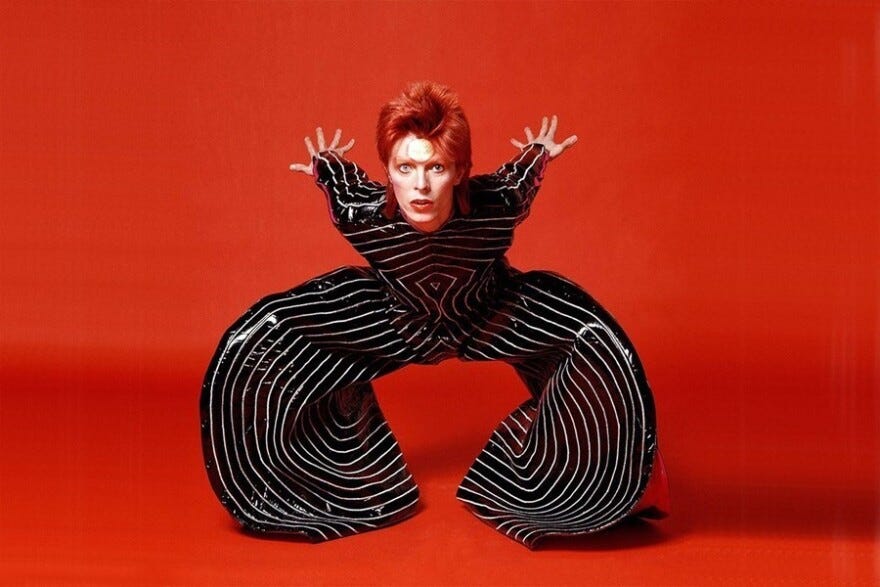
Bowie also believed that it is necessary to explore yourself as though you are an experimentation to yourself. To think of yourself as a canvas. Moonage Daydream focuses on this aspect of Bowie’s life.
So, can vulnerability and playing a part really exist in the same room? Can you be vulnerable while also wanting to control the perceptions others have of you? I’d like to think so. Goffman makes reference to American sociologist Robert E. Park’s theory:
It is probably no mere historical accident that the word person, in its first meaning, is a mask. It is rather a recognition of the fact that everyone is always and everywhere, more or less consciously, playing a role. […] It is in these roles that we know each other; it is in these roles that we know ourselves.
In a sense, and in so far as this mask represents the conception we have formed of ourselves— the role we are striving to live up to—this mask is our truer self, the self we would like to be. In the end, our conception of our role becomes second nature and an integral part of our personality. We come into this world as individuals, achieve character, and become persons.
Over the years, especially through our growing obsession for social media, we (mostly millenials) have become so fixated with “authenticity”. Be authentic! Be yourself! Live authentic! And truthfully, ‘be authentic’ makes me feel uncomfortable. Maybe it’s the sense of superiority I feel from it, or the assumption it seems to make that there is a real way to be and a fake way to be. But the more I question it, the more this discomfort seems to come from the definition we’ve given it because of the internet. Authenticity in the context of identity is simply defined as being true to one’s own personality, spirit, or character. And, as Park states, if the person—or role— we strive to live up to is an honest and true reflection of who we are internally, we are then by definition behaving authentically.
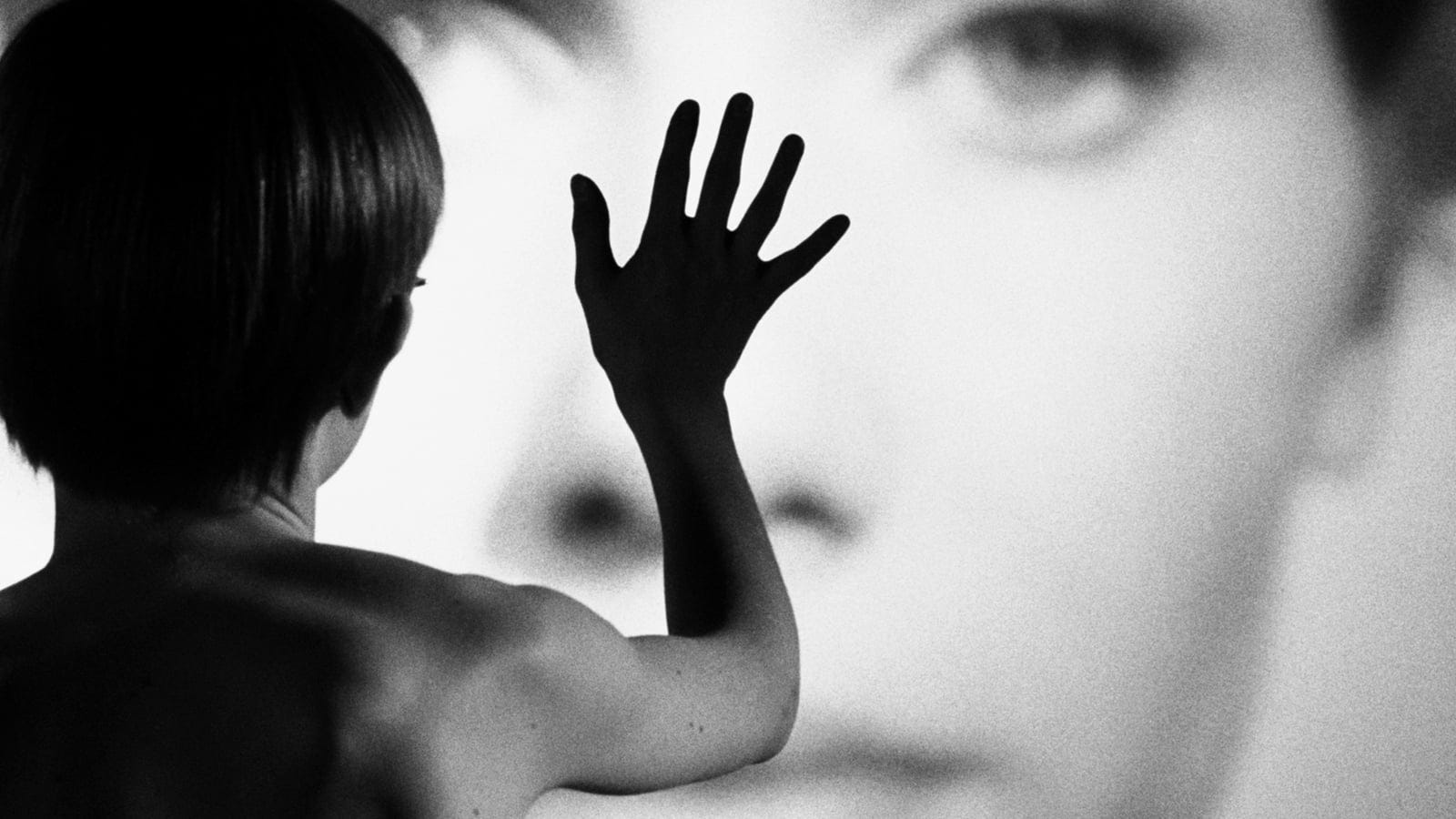
I think we struggle with how fluid being human is. I certainly do. I feel a constant tension with how I see myself and what I feel I am expected to be. I feel shame if I am not liked. I want my tone of voice to perfectly reflect how I feel in the moment, and that doesn’t always happen. I want to appear confident when I speak, but that doesn’t always happen. I want to be understood by everyone who follows me on Instagram, but that isn’t going to happen. Different people bring out different sides of me. I am an introvert, and I can happily spend a day with other people. Am I pretending? Am I not true to myself when I act a little out of the usual? Not necessarily, no, I am simply being myself. I am exploring every facet of who I am, and who I can be. And it won’t always be or look the same.
Swedish writer and director Ingmar Bergman explores this internal tension in his 1966 psychological thriller Persona.
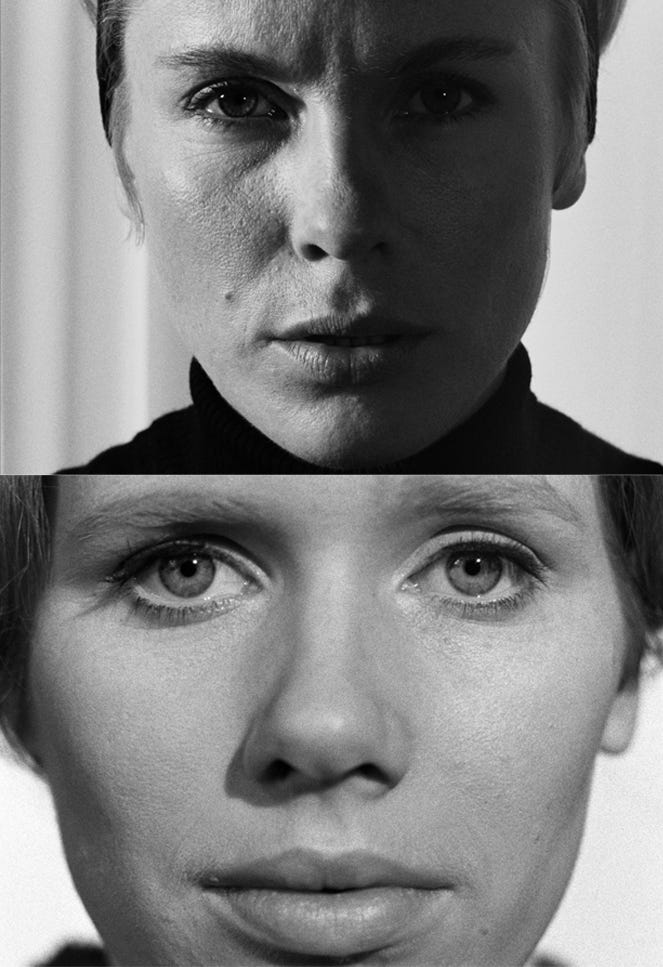
The film is about a nurse, Alma, and her patient, Elisabet, a famous actress who has stopped speaking. Alma is asked to take care of Elisabet, and in the process, begins having trouble distinguishing herself from the actress, as both also share a physical resemblance. The film can be interpreted in many different ways, but at the core, to me, it is a visual representation of self exploration and the anxieties that come with it when involving another person in that process, or as Goffman puts it, when having an audience.
I love this subject. And will probably write more on this eventually. But for now, I’ll end here: There is so much to learn about being alive. And I love that about us. I don’t think I’ll uncover every bit of who I am in this lifetime, and to some, that might be a scary thought. But I can spend my life trying. Exploring. As David Bowie said, you are missing out on your own life when you don’t explore within yourself all that you are. And with that I say, explore the beauty, explore the chaos, embrace your questions and your doubts, be fiercely certain when you decide to be, change your mind, be unsure, take your time. I love that you are curious, even if that means you’ll play a few different parts for a while.